

Architectural Study
Detailed Architectural Analysis
- Typology: Vesara/Hoysala-style Hindu Temple (Ekakuta - single shrine).
- Dynasty: Built by the Hoysala Empire (12th century CE).
- Religious Spectrum: Dedicated to Lord Vijayanarayana (an aspect of Vishnu).
- Key Feature: Famous for its Stellate (Star-shaped) platform and floor plan.
- Orientation: Primarily east-facing with entrances on three sides (North, South, East).
- Planning Principle: Advanced Hoysala grid system with complex symmetry.
- Jagati: A wide star-shaped platform following the contour of the temple walls.
- Spatial Layout: Garbhagriha, Antarala (vestibule), and a massive Navaranga (pillared hall).
- Verticality: Unlike Nagara temples, it emphasizes horizontal friezes and intricate detailing.
- Shikhara: The original tower is lost; the structure now emphasizes its flat, ornate roofline.
- Proportional System: Mastered by the architect Amarashilpi Jakanachari (legendary) and Ruvari Mallitamma.
- Construction Type: Intricate interlocking masonry using soft stone that hardens over time.
- Pillars: Features lathe-turned pillars with mirror-like finishes.
- Ceilings: Deeply carved domical ceilings with complex floral and geometric motifs.
- Primary Material: Chloritic Schist (Soapstone), allowing for micro-fine carving.
- Sculptural Precision: Detail so fine that individual jewelry beads and fingernails are visible.
- Joinery: Sophisticated interlocking stone brackets (Madanikas).
- Iconographic Bands: Horizontal rows of elephants (stability), lions (courage), and horses (speed).
- Madanikas: 42 exquisite bracket figures depicting celestial dancers in various poses.
- Narrative Friezes: Detailed depictions from the Ramayana, Mahabharata, and Puranas.
- Doorways: The Makara Torana over the entrances is among the most ornate in India.
- The Stellate Plan: Symbolizes the radiating energy of the deity at the center.
- Victory Monument: Built to commemorate King Vishnuvardhana’s victory over the Cholas at Talakadu.
- Living Heritage: Unlike many ancient sites, it remains an active place of worship.
- Location: Situated on the banks of the Yagachi River in Karnataka.
- UNESCO Status: Part of the "Sacred Ensembles of the Hoysalas" World Heritage Site (2023).
- Material Science: Uses Chloritic Schist (Soapstone); it is soft when quarried (allowing for jewelry-level detail) but hardens like granite upon exposure to air.
- The Lathe Technique: Features lathe-turned pillars. The Hoysalas used stone-turning technology to create perfectly symmetrical, circular segments with mirror-like finishes.
- The Stellate Advantage: The 32-pointed star plan was designed to maximize exterior wall surface area, providing 3x more space for sculptural narratives than a standard square plan.
- Sandhara Plan: A unique double-wall construction providing an inner sanctum path while maintaining structural integrity for the heavy stone ceilings.
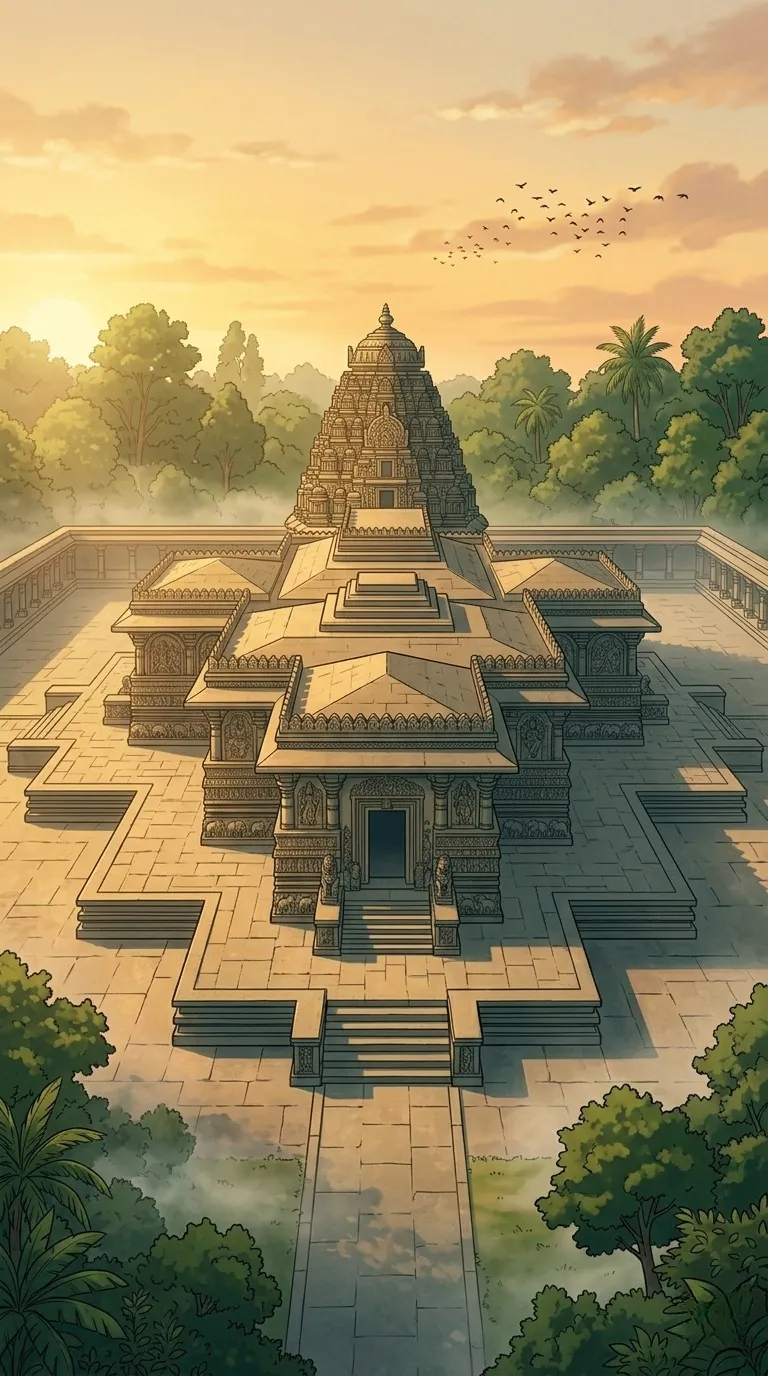
History of Chennakeshava Temple
The Chennakeshava Temple stands as a testament to the cultural resurgence of the Hoysala Dynasty. Following the King's conversion from Jainism to Vaishnavism under the influence of Saint Ramanujacharya, the temple became the artistic focal point of the empire.
- 1117 CE: King Vishnuvardhana commissions the temple to mark the Battle of Talakadu.
- 1117–1217 CE: Construction spans three generations; the Navaranga and carvings are perfected.
- 1311–1326 CE: Malik Kafur and later forces of the Delhi Sultanate raid the region; some structures damaged.
- 1397 CE: Gunda, a general of the Vijayanagara Empire, repairs the temple and adds the gopuram.
- 16th Century: The Vijayanagara kings provide additional patronage, adding the outer compound walls.
- 18th Century: The temple survives the turbulent wars between Mysore rulers and colonial forces.
- 1920s: Detailed documentation begins by the Mysore Archaeological Department.
- 2023 CE: Officially inscribed as a UNESCO World Heritage Site.
- Legacy: It remains one of the few Hoysala temples where daily rituals have been performed for 900 years.
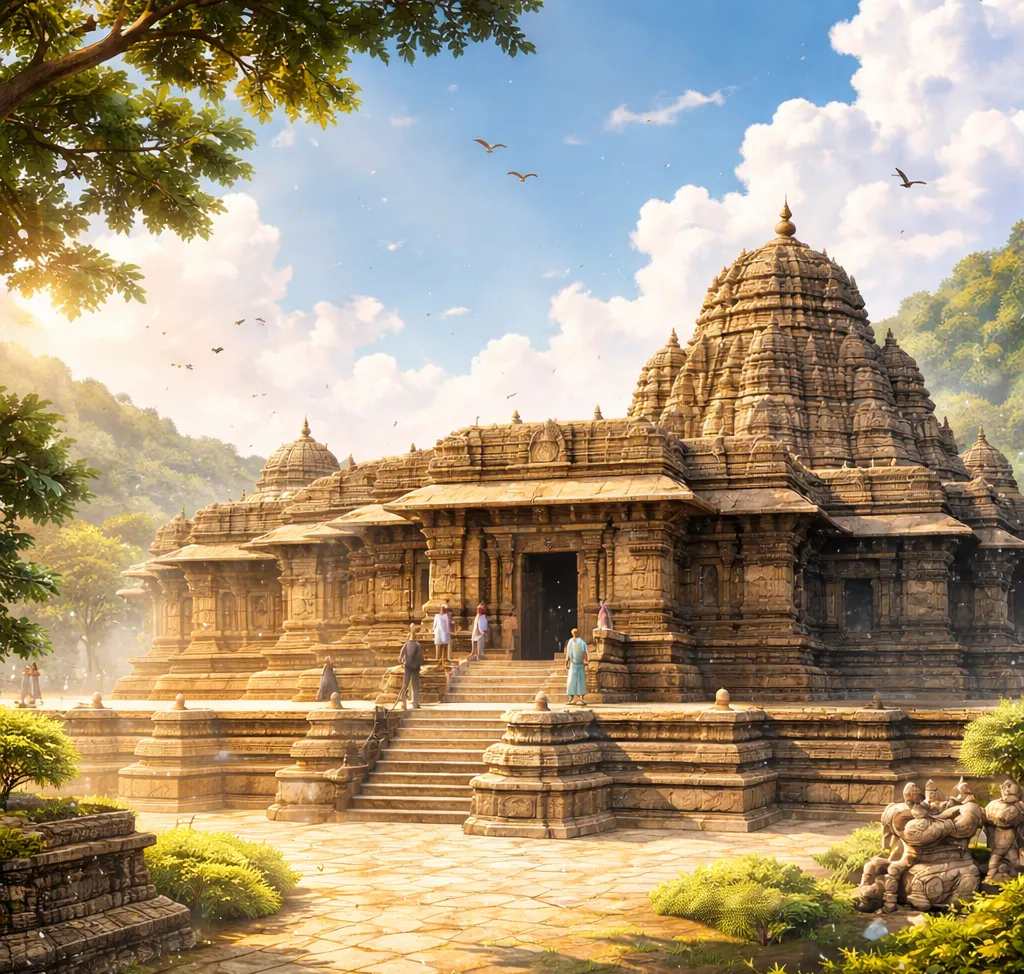
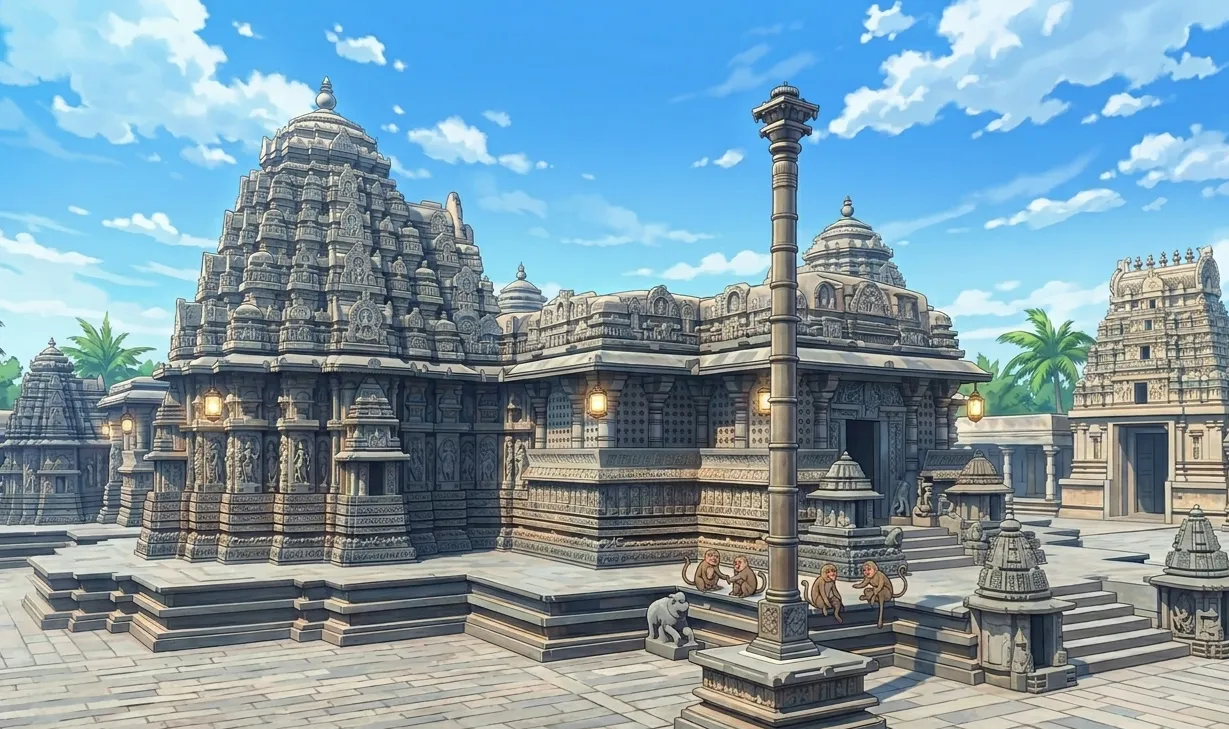
The Belur Complex
Major Structures within the Enclosure
- I. Main Shrine & Landmarks
- Chennakeshava Shrine: The primary temple housing the 6ft tall Vijayanarayana idol.
- Kappe Chennigaraya: A smaller shrine built by Queen Shantala Devi.
- The Gravity Pillar: A 42ft tall monolithic pillar that stands on its own weight without a foundation.
- Mohini Pillar: A stunningly carved pillar in the Navaranga featuring an image of Lord Vishnu as Mohini.
- II. Sculptural Masterpieces
- The Madanikas: 42 bracket figures like 'Darpana Sundari' (Lady with mirror) and 'Shukabhashini'.
- Narasimha Pillar: Once revolved on its axis; covered in miniature carvings of the entire pantheon.
- The Big Tank (Vasudeva Sarovara): A stepped water tank located in the northeast corner.
The Madanika Masterpieces
The 42 Shilabalikas (bracket figures) are the soul of Belur. Carved from single blocks of chloritic schist, they represent the pinnacle of Hoysala aesthetics. Legend says they were inspired by the beauty of Queen Shantala Devi, a master dancer herself.
Iconic Figures & Micro-Detailing
- Darpana Sundari (The Mirror Beauty): The most famous figure, capturing a lady admiring herself in a mirror. Notice the hollow-carved jewelry and the realistic musculature of her arms.
- Shuka Bhashini (Lady with Parrot): A masterpiece of narrative carving where a parrot listens to a lady’s secrets. The detailing is so fine you can see the individual feathers of the bird.
- The Huntress: A rare depiction of feminine power, shown with a bow and arrow. Her attire and the beaded tassels on her waist are carved with jewelry-like precision.
- Keshapasha (The Hairstylist): Captures a woman wringing water from her hair. Legend has it that if you look closely, you can see sculpted water droplets at the ends of her hair strands.
- The Musician: A lady playing a *Veena*. The strings of the instrument, though made of stone, are carved to be incredibly thin and delicate.
Technical Marvel: These brackets are not just decorative; they are interlocking structural elements that provide a transition between the vertical pillars and the massive stone ceiling beams.
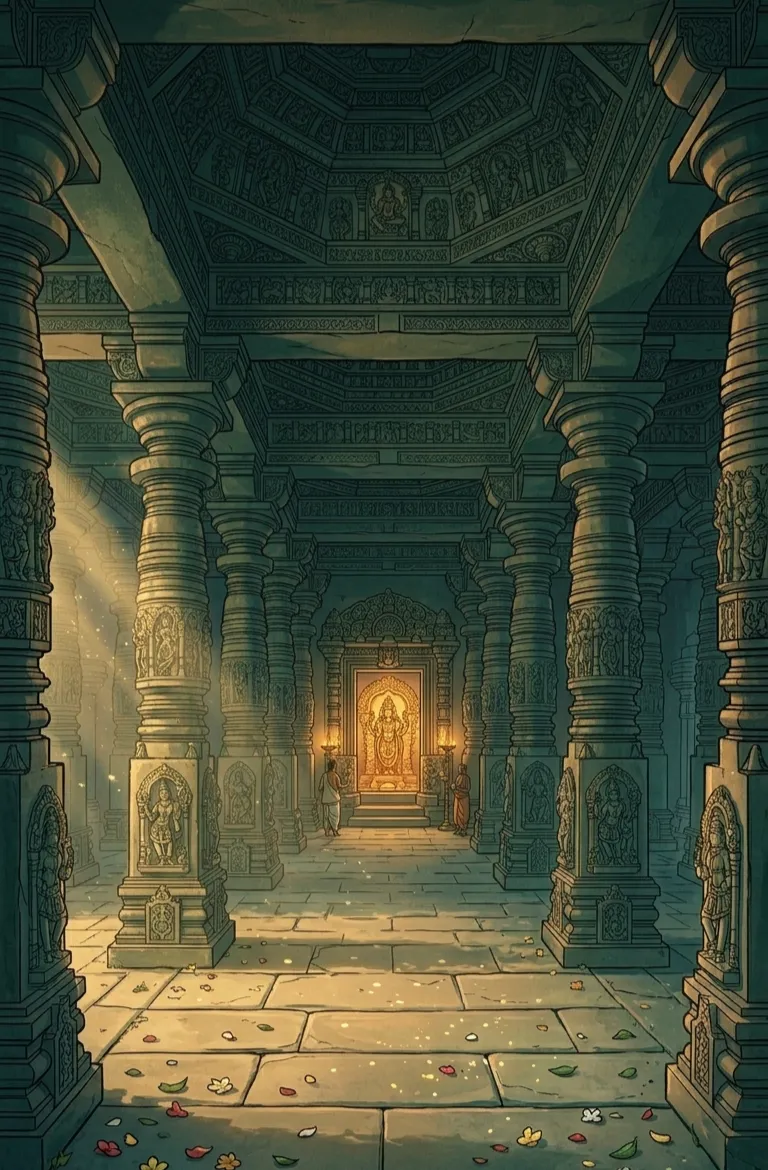
Philosophy & Symbolism
The Chennakeshava Temple is a celebration of Srivaishnavism. The name 'Chenna' (Handsome) and 'Keshava' (Vishnu) reflects the Hoysala obsession with divine beauty. Every inch of stone is a prayer, where the density of the carving represents the omnipresence of the divine in every atom of existence.
The Madanika Ideal: The female figures (Shilabalikas) are not merely decorative. They represent the Ideal Womanhood and the connection between physical grace and spiritual bliss. Each pose is a study in Natyashastra (dance science), bridging the gap between human art and celestial perfection.
Social Inclusion: Inscriptions at Belur are unique for their mention of sculptors by name (like Dasoja and Chavana), a rarity in ancient history that highlights the high social status of artists in the Hoysala era.
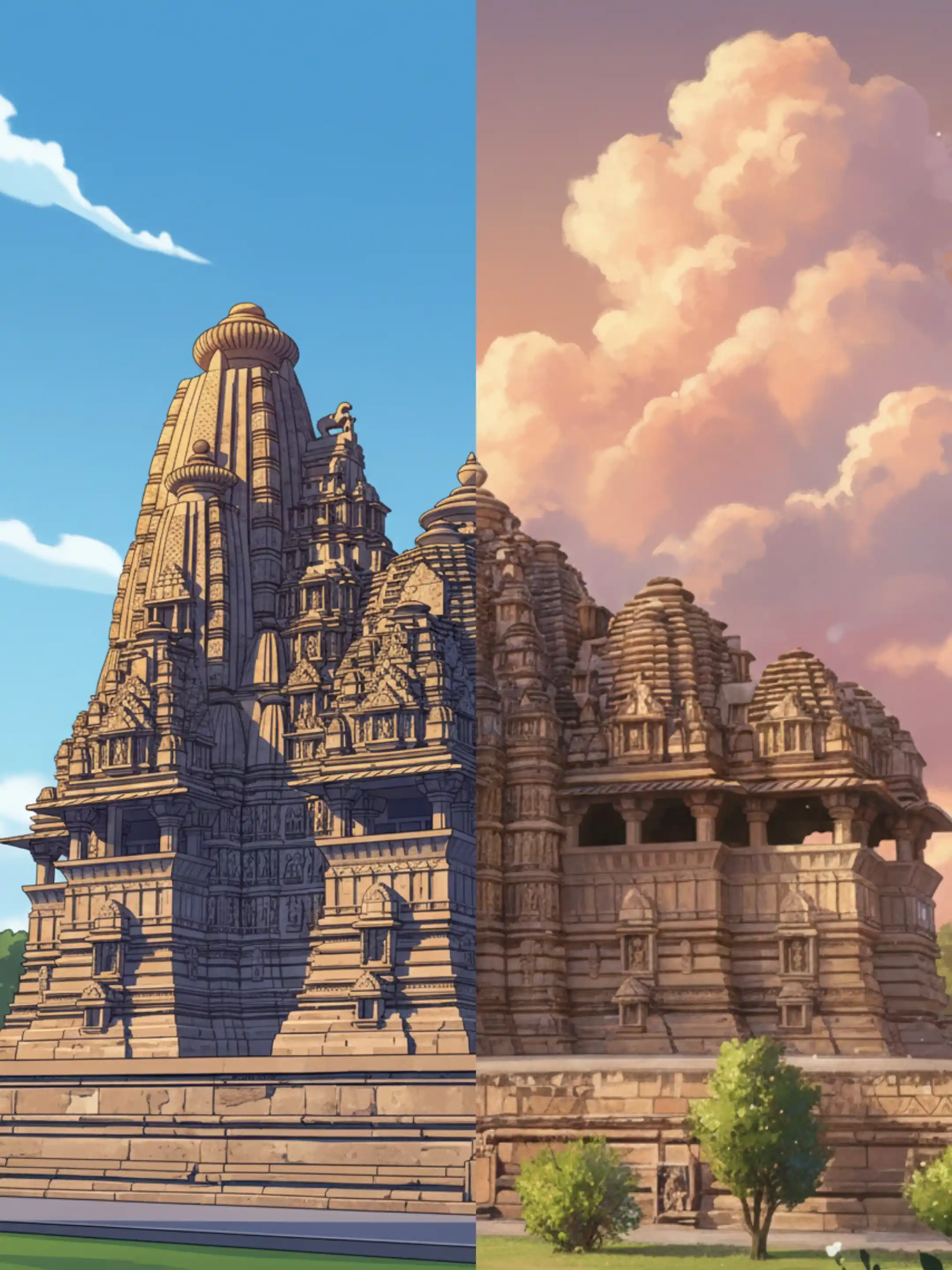
Khajuraho: Temples of Symbolism
Explore the zenith of Nagara architecture and the Chandela legacy, where cosmic geometry and profound Tantric symbolism are carved into eternal stone.
Explore Now →