INDIAN HERITAGE
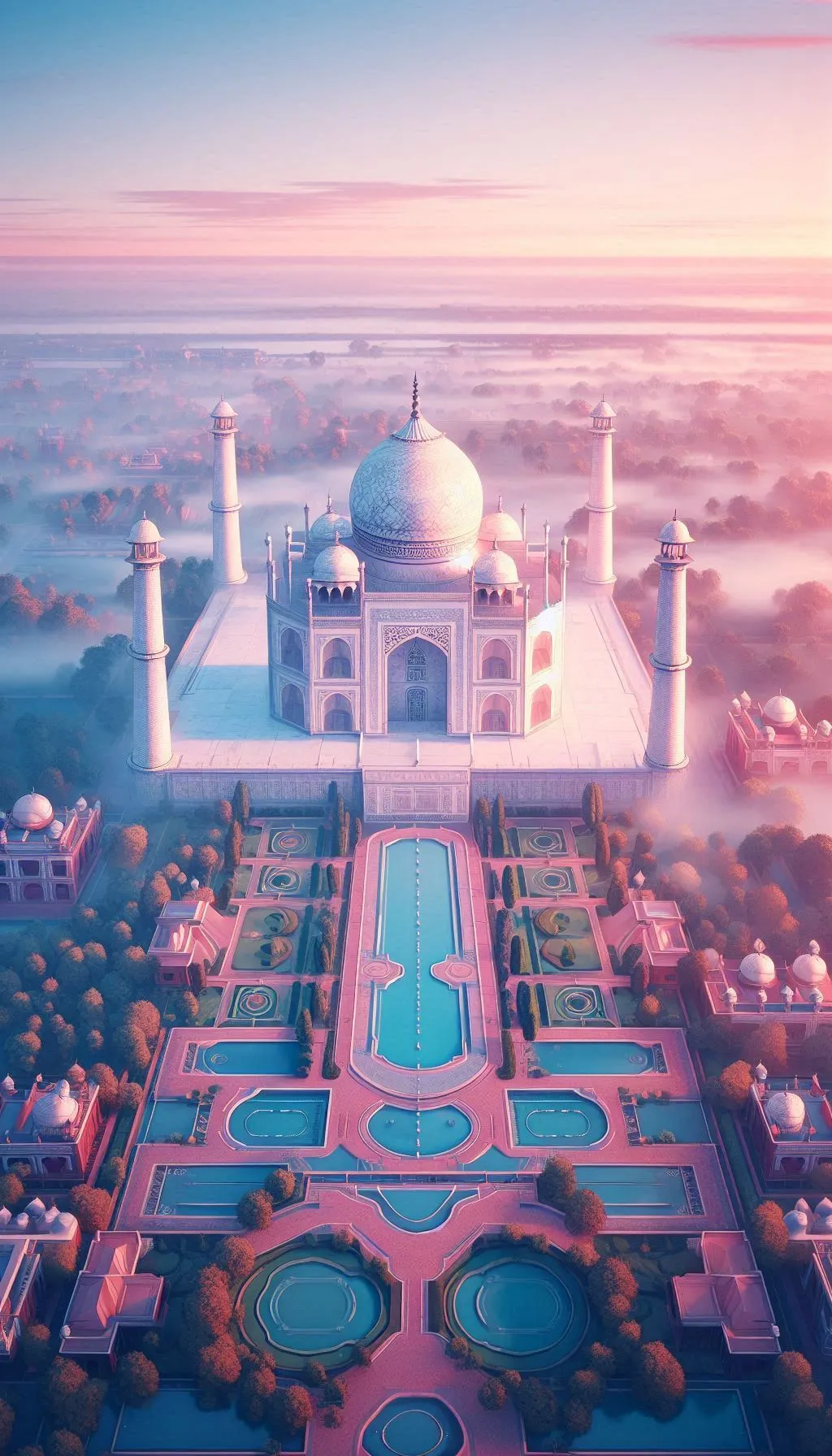
Exploring the crown of palaces—a timeless monument of love, symmetry, and Mughal brilliance.
Explore HistoryConstruction Started
World Heritage Site
Makrana White Stone
Mumtaz Mahal passes away. Shah Jahan begins the quest for a paradise on earth.
20,000 artisans gather. The white marble is sourced from Makrana.
The main mausoleum is completed, showcasing perfect bilateral symmetry.
The complex is finalized, standing as a Wonder of the World.
Perfect bilateral symmetry, except for Shah Jahan's cenotaph.
Floral inlays of lapis lazuli, jade, and other semi-precious stones.
The 73m high onion dome is the central architectural feature.
Made with translucent white marble that changes color at different times of day.
Four tall minarets designed to lean outward slightly.
The large pool reflects the monument’s beauty.
Quadrilateral garden design symbolizing paradise.
Quranic verses inscribed on the monument’s walls.
Fusion of Persian, Turkish, Indian, and Mughal architecture.
Delicate marble screens add elegance and privacy.
Massive red sandstone entrance gate, highlighting symmetry.
Intricate geometric patterns woven into the design.
Central mausoleum flanked by symmetrical gardens and structures.
Built between 1632 and 1653 under Mughal Emperor Shah Jahan.
Designed by Ustad Ahmad Lahori, the chief architect of the Mughal court.
Constructed on a complex wooden foundation supported by wells to stabilize it near the Yamuna River.
The calligraphy increases in size higher up, creating a uniform appearance from ground level.
The gilded finial atop the dome combines Islamic and Hindu decorative elements.
Flanking mosque and guest house built in red sandstone enhance visual contrast.
The actual tombs of Shah Jahan and Mumtaz Mahal lie in a lower chamber beneath the main hall.
Built on a raised marble platform overlooking the Yamuna River.
Over 20,000 artisans and craftsmen were employed in its construction.
Materials were transported from across Asia, including marble from Makrana in Rajasthan.
Designated a UNESCO World Heritage Site in 1983 for its cultural significance.
The central chamber is designed to amplify and echo sounds harmoniously.
The main interior chamber follows an octagonal plan with interconnected rooms.
Features intricate floral carvings inspired by natural forms rather than human figures.
Built as a mausoleum for Mumtaz Mahal, symbolizing Shah Jahan’s enduring love.