
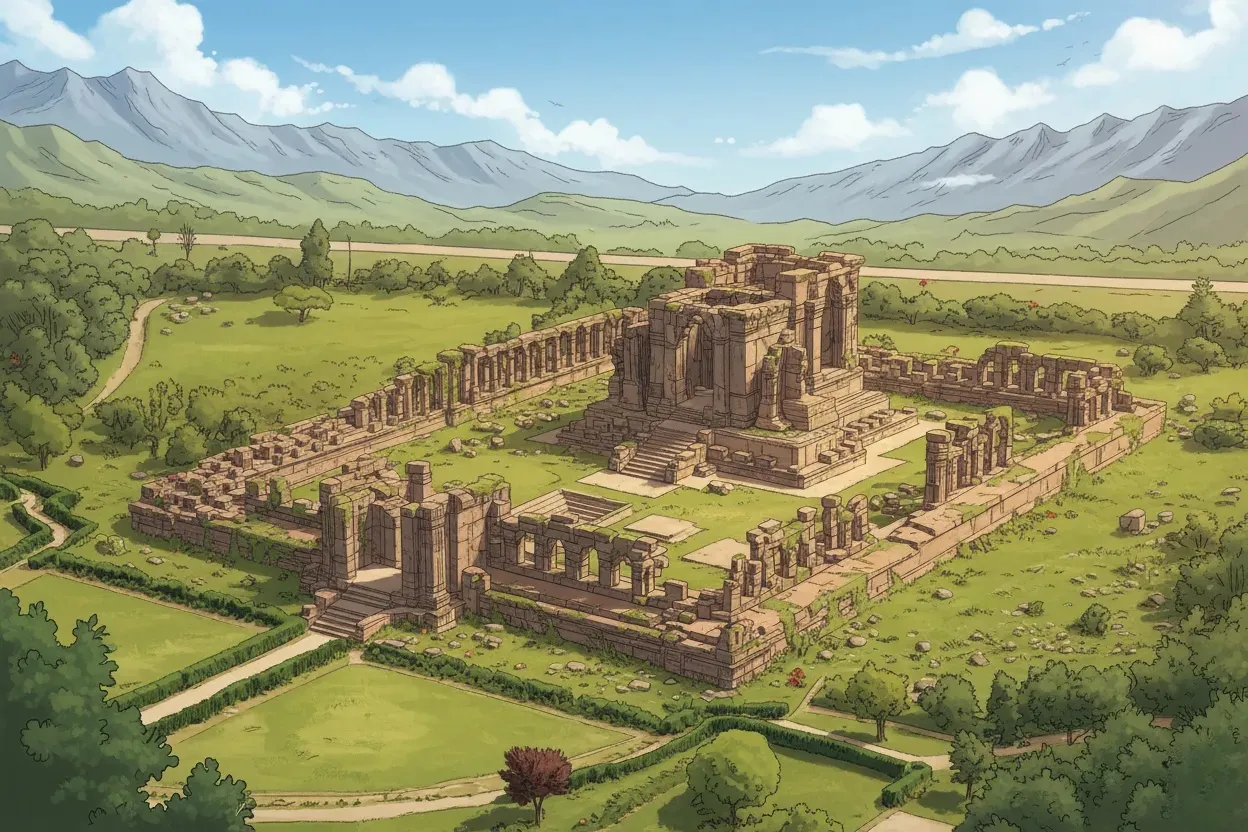
01. The Sun's Ruin: Martand Surya
Deep in the heart of the Anantnag district lies the Martand Surya Temple, an 8th-century architectural titan built by King Lalitaditya Muktapida. He was the most powerful ruler of the Karkota Dynasty, often described as the "Alexander of India." This temple was his crown jewel, designed to reflect a kingdom that spanned from the Caspian Sea to the banks of the Ganges.
Architectural Lore & Lost Secrets:
- The Fusion of Worlds: A rare "Gandharan" style masterpiece—a unique blend of Greek, Roman, and Indian aesthetics. The fluted columns and triangular pediments suggest the influence of Silk Road craftsmen.
- The Engineering of Immortality: The limestone blocks were fused with molten lead and iron dowels. It was so sturdy that invaders had to burn timber inside the temple for a year just to weaken the stone.
- Solar Geometry: On the equinoxes, the first rays of the sun align perfectly with the entrance, traveling through the courtyard to strike the spot where the deity once stood.
Architectural Case Study: Martand Surya Temple
- Typology: Peristyle solar temple complex with central sanctum and colonnaded courtyard.
- Dynasty & Date: Karkota Dynasty, c. 725–756 CE.
- Material Palette: Locally quarried limestone blocks reinforced with iron dowels and molten lead joints.
- Structural System: Load-bearing masonry with post-and-lintel construction, inspired by Greco-Roman classical orders.
- Spatial Organization: Rectangular courtyard (84 columns) enclosing a raised central shrine, aligned east–west for solar ingress.
- Stylistic Influence: Gandharan synthesis—Indian shikhara traditions fused with Hellenistic pediments, fluted shafts, and Corinthian-like capitals.
- Climatic Response: Elevated plinth and open peristyle allow snowmelt drainage and thermal moderation in Kashmir’s alpine climate.
- Engineering Innovation: Use of molten metal binding drastically increased seismic resistance, explaining its survival despite deliberate destruction.
- Symbolic Geometry: The sun’s equinoctial alignment reinforces Surya worship through astronomical precision.
- Legacy: One of the earliest monumental examples of cross-cultural architectural globalization in South Asia.
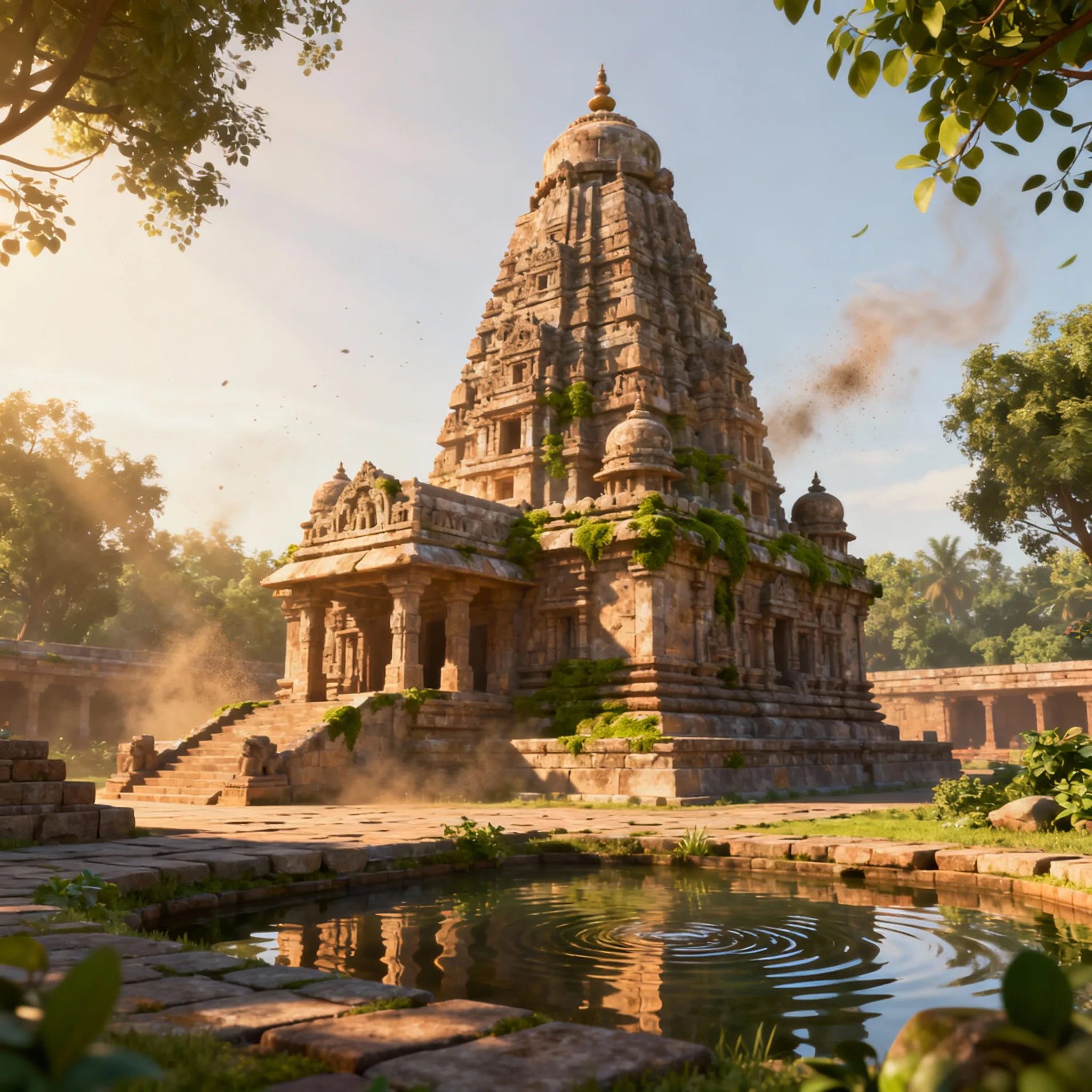
02. The Chola Marvel: Brihadishwara
Completed in 1010 CE by Raja Raja Chola I, this temple in Thanjavur is a granite mountain. It represents the peak of South Indian naval power, built using over 130,000 tons of solid granite—a material not found naturally within 100 kilometers of the site.
Engineering of the Gods:
- The 80-Ton Zenith: The 'Kumbam' (capstone) at the very top is a single carved stone weighing 80,000kg. Engineers moved it using a 6km earthen ramp that stretched into a nearby village.
- Interlocking Stone: The temple uses no mortar or cement. It is held together entirely by gravity and interlocking joints, surviving six major earthquakes over 1,000 years.
- The Granite Paradox: Thousands of elephants were used to transport millions of granite blocks across fertile plains, a logistical feat unparalleled in ancient history.
Architectural Case Study: Brihadishwara Temple
- Typology: Dravidian vimana temple with axial mandala planning.
- Dynasty & Date: Imperial Chola Dynasty, completed 1010 CE.
- Material Palette: Monolithic granite construction using over 130,000 tons of stone.
- Structural System: Dry-stone, gravity-locked masonry with precision-cut interlocking blocks; zero mortar usage.
- Vertical Composition: 66-meter pyramidal vimana crowned by an 80-ton monolithic shikhara stone.
- Construction Logistics: A 6-kilometer earthen ramp system used to haul the capstone—an unparalleled feat of medieval engineering.
- Load Distribution: Stepped massing channels vertical loads directly into the foundation, granting exceptional seismic stability.
- Urban Role: Temple functioned as an economic, administrative, and ritual nucleus employing hundreds of artisans, dancers, and scholars.
- Acoustic Design: Stone geometry amplifies Vedic chants within the sanctum while minimizing echo distortion.
- Architectural Legacy: Defined the canonical proportions for later South Indian temple architecture across Southeast Asia.
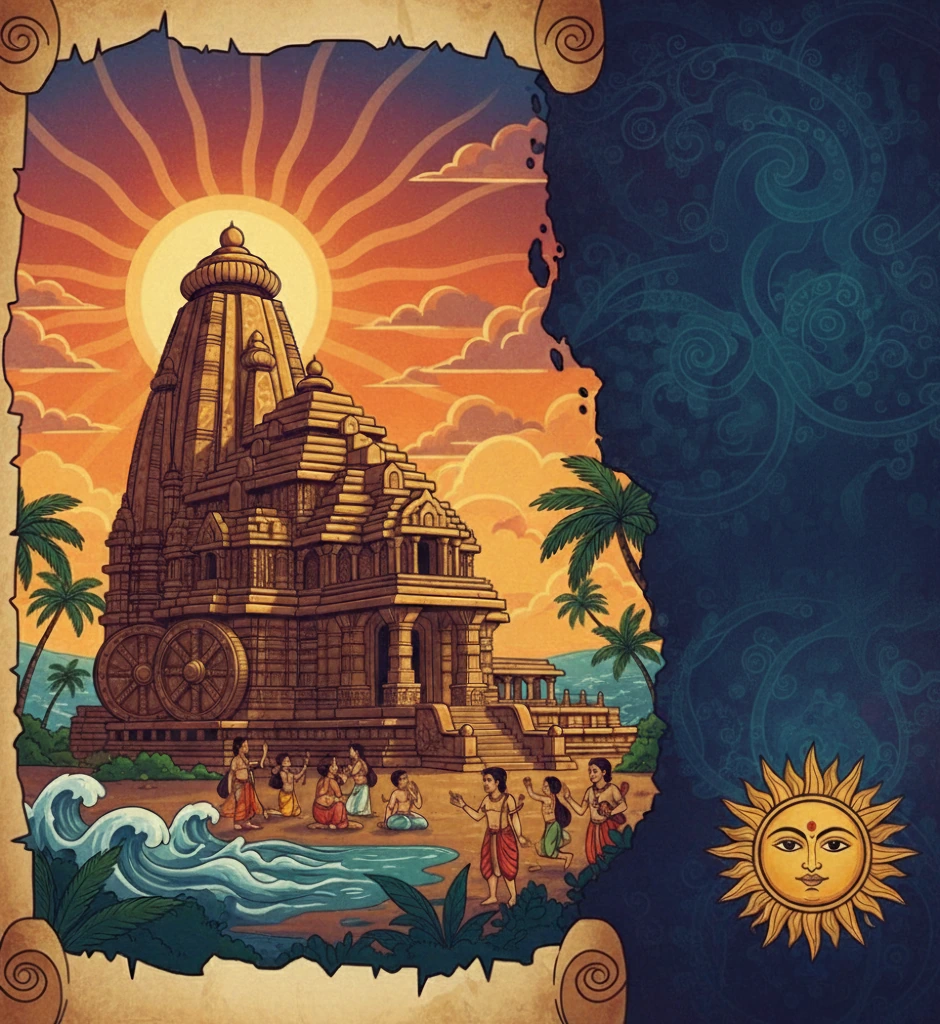
03. The Celestial Chariot: Konark
Built by King Narasimhadeva I, the Konark Sun Temple is a cosmic machine. It was designed as a gargantuan chariot for the Sun God, featuring 24 intricately carved wheels and pulled by 7 horses, representing the mechanics of time.
The Science of Time:
- The Precision Sundials: The wheels are precision instruments. By observing the shadow of the hub on the spokes, ancient priests calculated time accurate to the minute.
- The Magnetic Peak: Legend says a 52-ton magnet at the top held a floating idol in mid-air. Sailors called it the "Black Pagoda" because its magnetic pull allegedly wrecked ships' compasses.
- World in Stone: The walls depict every facet of 13th-century life, from military processions to exotic trade, serving as a stone encyclopedia of the Kalinga Empire.
Architectural Case Study: Konark Sun Temple
- Typology: Monumental solar chariot temple integrated with astronomical symbolism.
- Dynasty & Date: Eastern Ganga Dynasty, c. 1250 CE.
- Material Palette: Khondalite stone for structural mass; laterite core infill.
- Structural System: Load-bearing stone masonry with iron clamp reinforcement.
- Formal Geometry: Temple conceived as Surya’s chariot—24 wheels function as calibrated sundials; 7 horses symbolize temporal cycles.
- Astronomical Alignment: Eastern orientation ensures sunrise illumination of the sanctum during equinoxes.
- Magnetic Engineering (Legendary): Accounts describe a massive lodestone at the summit influencing internal structural balance.
- Surface Narrative: Sculptural program documents court life, warfare, maritime trade, rituals, and cosmology in extreme detail.
- Environmental Interaction: Coastal exposure required dense stone massing to resist cyclonic winds and saline erosion.
- Architectural Legacy: Represents the zenith of Kalinga temple architecture and India’s most complex fusion of science, art, and cosmology.