

Architectural Study
Detailed Architectural Analysis
- Typology: Historic Roman Catholic basilica and church complex in Old Goa.
- Historical Setting: Constructed during the period when Goa served as the capital of Portuguese India.
- Religious Tradition: Latin Catholic Christianity within the historic Portuguese Goan context.
- Architectural Character: Portuguese architecture incorporating Baroque decorative influences.
- Location: Old Goa, on the historic Mandovi-region cultural landscape.
- Spatial Organization: A longitudinal church plan centered on a single nave, transept, chancel, and sanctuary.
- Transept Chapels: The arms of the transept function as major devotional spaces alongside the principal nave.
- Processional Axis: The principal axis directs movement from the entrance toward the sanctuary.
- Religious Focus: The sanctuary and high altar form the principal visual and liturgical focus.
- Structural Character: Heavy masonry construction suited to the monumental church architecture of early modern Goa.
- Wall Construction: Thick masonry walls provide structural mass and thermal buffering.
- Roofing: The interior includes vaulted architectural elements, including a coffered barrel vault in the chancel.
- Vertical Emphasis: The façade and interior height create a strong monumental approach to the sanctuary.
- Primary Materials: Laterite masonry, granite, lime-based finishes, timber, and carved decorative elements.
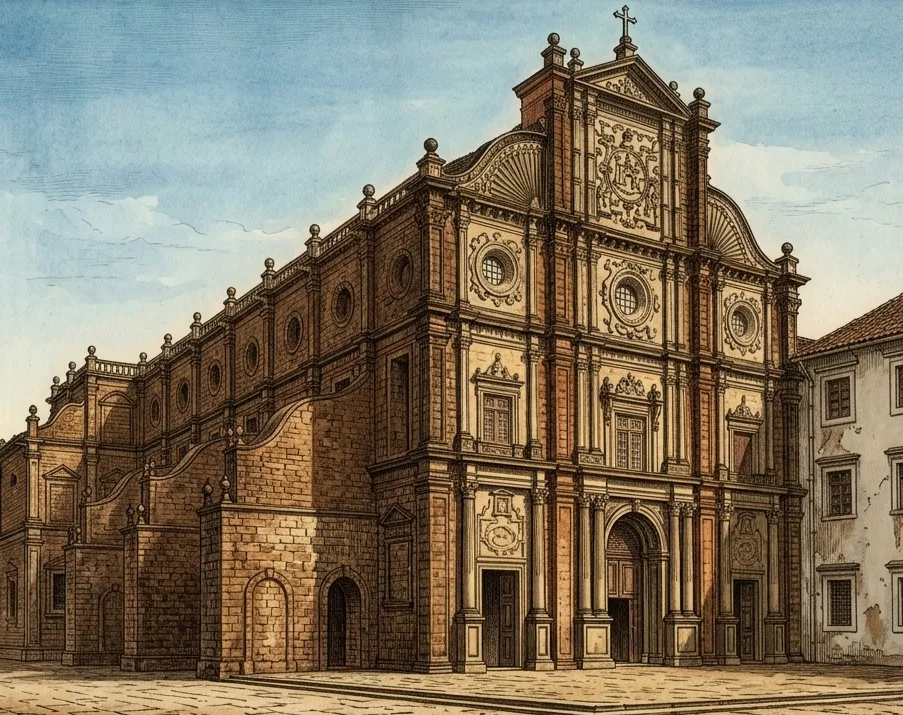
- Exterior Character: The warm laterite façade gives the basilica its distinctive reddish-brown appearance.
- Interior Finish: Decorative gilding, carved woodwork, paintings, and religious ornament create a highly elaborate interior.
- Façade Material: The monumental façade incorporates Bassein granite alongside laterite elements.
- Façade Composition: The façade is organized into three vertical sections with laterite pilasters, classical orders, mouldings, niches, and ornamental details.
- European Influences: Its design incorporates European architectural influences, including Flemish ornamentation, French window treatments, and Italian Serlian mouldings.
- Visual Hierarchy: The central entrance and upper architectural levels establish a strong vertical composition.
- Decorative Language: Classical orders, mouldings, niches, pediments, and ornamental detailing enrich the façade.
- Nave: The principal interior space provides the main congregational and processional axis.
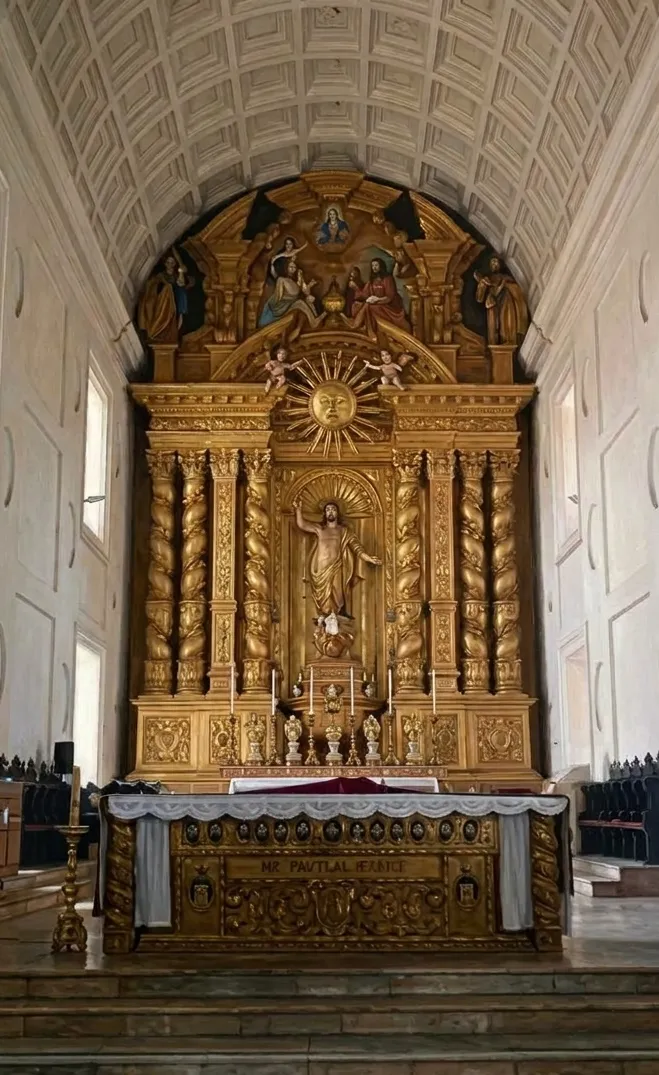
- High Altar: The principal altar forms the visual climax of the interior.
- Gilded Woodwork: Elaborately carved and gilded elements are among the defining visual features of the church interior.
- Religious Art: Paintings, sculptures, altarpieces, and devotional imagery form an integrated sacred-art environment.
- Iconographic Focus: Christian imagery emphasizes Christ, the Virgin Mary, saints, and biblical narratives.
- Decorative Function: Architecture and artwork work together to communicate theological narratives to worshippers.
- Heritage Significance: The basilica forms part of the historic Churches and Convents of Goa heritage landscape.
- UNESCO Recognition: The Churches and Convents of Goa were inscribed on the World Heritage List in 1986.
- Cultural Legacy: The monument represents an important chapter in the architectural and religious history of Goa.
History of the Basilica of Bom Jesus
The Basilica of Bom Jesus emerged during the period when Old Goa was a major political, commercial, and religious center of the Portuguese Estado da Índia. Its history is closely connected with the development of Christianity in Goa and the wider history of Portuguese maritime expansion across the Indian Ocean.
- 1510: Portuguese forces established control over Goa, beginning a new period in the history of Old Goa.
- 16th Century: Old Goa developed into a major Portuguese colonial administrative and religious center.
- Late 16th Century: Construction of the Basilica of Bom Jesus took place during the late 1500s, with the church being consecrated in 1605.
- 1605: The church was consecrated and formally entered its role as an important Catholic sanctuary.
- 1622: The body of St. Francis Xavier was transferred to the basilica.
- 17th Century: The basilica became increasingly associated with devotion to St. Francis Xavier.
- 18th Century: Old Goa experienced demographic and political decline as administrative importance shifted toward Panjim.
- 19th Century: The historic churches of Old Goa remained important religious and architectural monuments.
- 20th Century: Archaeological and conservation interest increased around the historic monuments of Old Goa.
- 1986: The Churches and Convents of Goa were inscribed as a UNESCO World Heritage Site.
- Modern Era: The basilica continues to function as an important Catholic pilgrimage and heritage site.
Sacred Spaces & Religious Art
Principal Sacred Elements
- Main Nave: The principal longitudinal space used for communal worship and ceremonial movement.
- High Altar: The principal liturgical focus of the church, richly decorated with carved and gilded elements.
- Dedication: The basilica is dedicated to the Bom Jesus, meaning the "Good" or "Holy Child Jesus."
- St. Francis Xavier: The basilica is internationally known for the tomb and relics of the Jesuit missionary.
- Marble Tomb: The tomb of St. Francis Xavier is an important artistic and devotional feature of the basilica.
- Gilded Altarpiece: Gold-toned carved decoration creates a strong visual contrast with the darker structural surfaces.
- Side Chapels: Secondary sacred spaces provide additional locations for devotion and religious imagery.
- Paintings: Christian paintings contribute narrative and devotional dimensions to the interior.
- Wood Carving: Carved wooden details demonstrate the craftsmanship associated with historic Goan ecclesiastical interiors.
- Relic Tradition: The presence of St. Francis Xavier's relics has made the basilica an important pilgrimage destination.
St. Francis Xavier & The Basilica
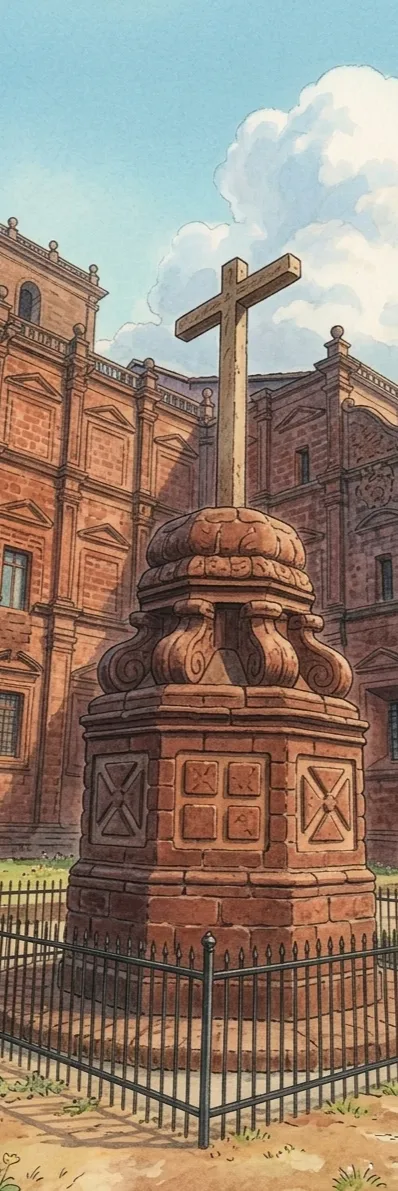
The history of the Basilica of Bom Jesus is inseparable from the legacy of St. Francis Xavier, the 16th-century Jesuit missionary whose remains are preserved at the basilica. His connection with Goa helped establish the church as an important destination for Catholic pilgrimage.
- Arrival in India: Francis Xavier arrived in Portuguese India in 1542 as part of the Jesuit missionary movement.
- Missionary Activity: His work took him across parts of coastal India and other regions of Asia.
- Death: Xavier died in 1552 on Shangchuan Island, off the coast of China.
- Burial in Goa: His remains were eventually transferred to Goa, where they became associated with the Basilica of Bom Jesus.
- Tomb: The ornate tomb is positioned within the basilica as a major devotional and artistic focal point.
- Pilgrimage: The basilica continues to attract pilgrims and visitors from India and around the world.
- Canonization: Francis Xavier was canonized by the Catholic Church in 1622.
- Cultural Legacy: His memory forms an important part of the religious and historical identity of Old Goa.
Old Goa & The Churches and Convents
The Basilica cannot be understood in isolation from Old Goadeveloped into one of the most important urban and religious centers on India's western coast.
The Sacred Landscape: Old Goa contains a remarkable concentration of historic churches and religious institutions, reflecting centuries of interaction between European Christianity and the cultural landscape of Goa.
Heritage Network: The Basilica of Bom Jesus forms part of the broader group of Churches and Convents of Goa recognized by UNESCO for their historical, architectural, and cultural significance.
Architecture in Context: The churches of Old Goa demonstrate how European architectural traditions were adapted to the climate, materials, craftsmanship, and social conditions of the Indian west coast.
The Brihadeshwara Temple
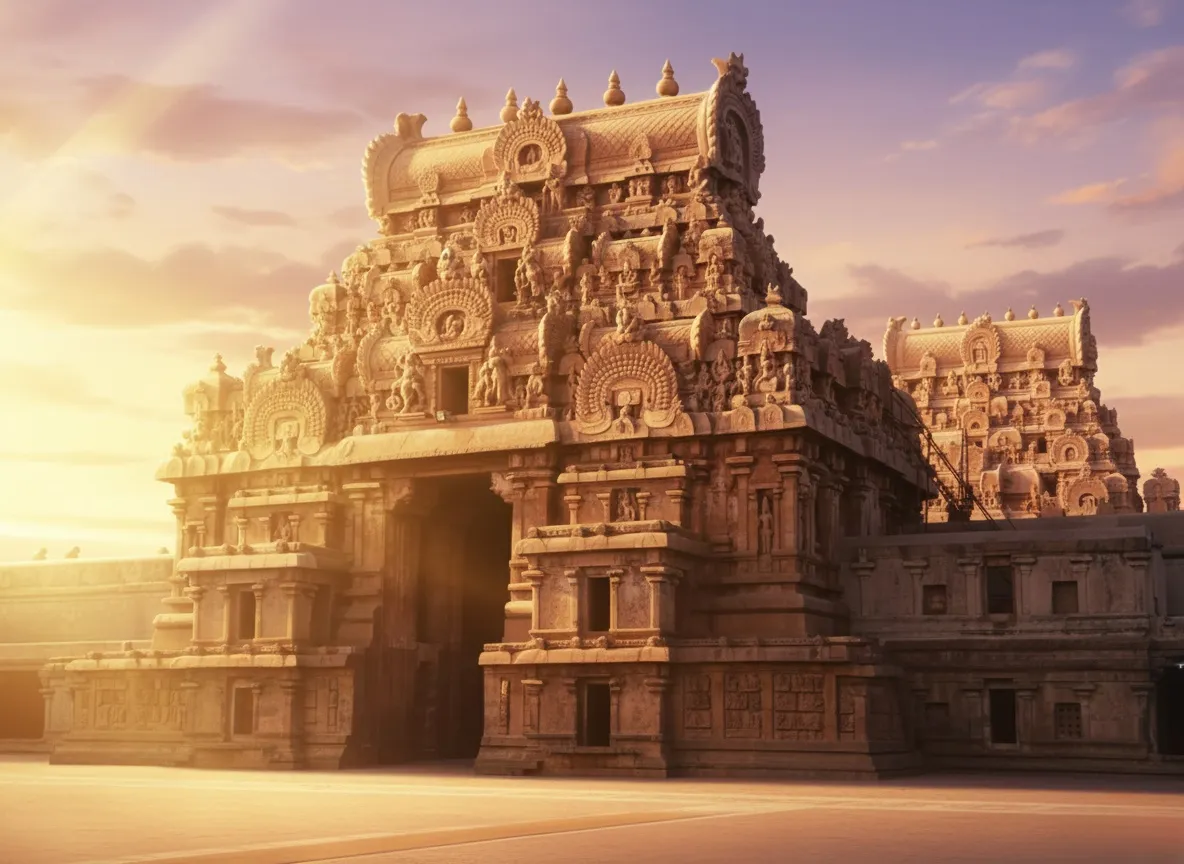
The Brihadeshwara Temple, built in the 11th century CE by King Raja Raja Chola I, is a monumental example of Dravida architecture. Explore its massive scale, engineering, sculpture, and sacred architectural symbolism.
Explore Now →