
Architectural Study
Architectural Analysis
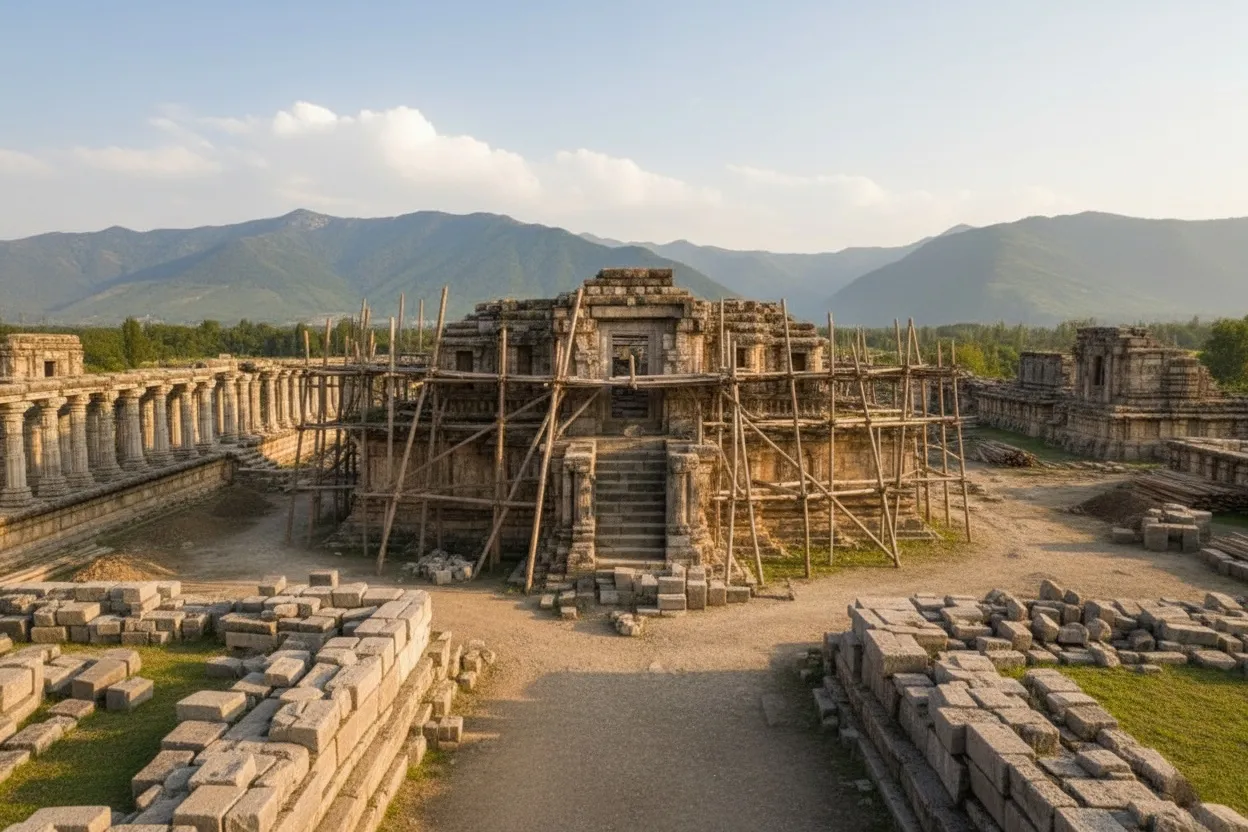
- Typology: Peristyle solar temple with enclosed colonnaded courtyard.
- Planning: Rectangular courtyard (approx. 220 ft × 142 ft) with axial east–west orientation.
- Structural System: Load-bearing post-and-lintel stone masonry.
- Materials: Limestone blocks reinforced with iron dowels and molten lead.
- Columns: Fluted shafts with Hellenistic-inspired capitals.
- Climate Response: Elevated plinth, thick walls, and open peristyle for snow drainage.
- Engineering: Lead joints improved seismic resistance.
History of the Martand Surya Temple
The Martand Surya Temple emerged during a politically expansive phase of early medieval Kashmir, reflecting royal ambition, territorial power, and religious authority.
- Patron: King Lalitaditya Muktapida of the Karkota Dynasty.
- Period: Constructed in the 8th century CE.
- Political Context: Kashmir as a Silk Route crossroads linking India, Central Asia, and Gandhara.
- Royal Ideology: Solar worship used to legitimize kingship and divine authority.
- Cultural Synthesis: Indigenous temple planning combined with foreign architectural influences.
Mythology & Symbolism
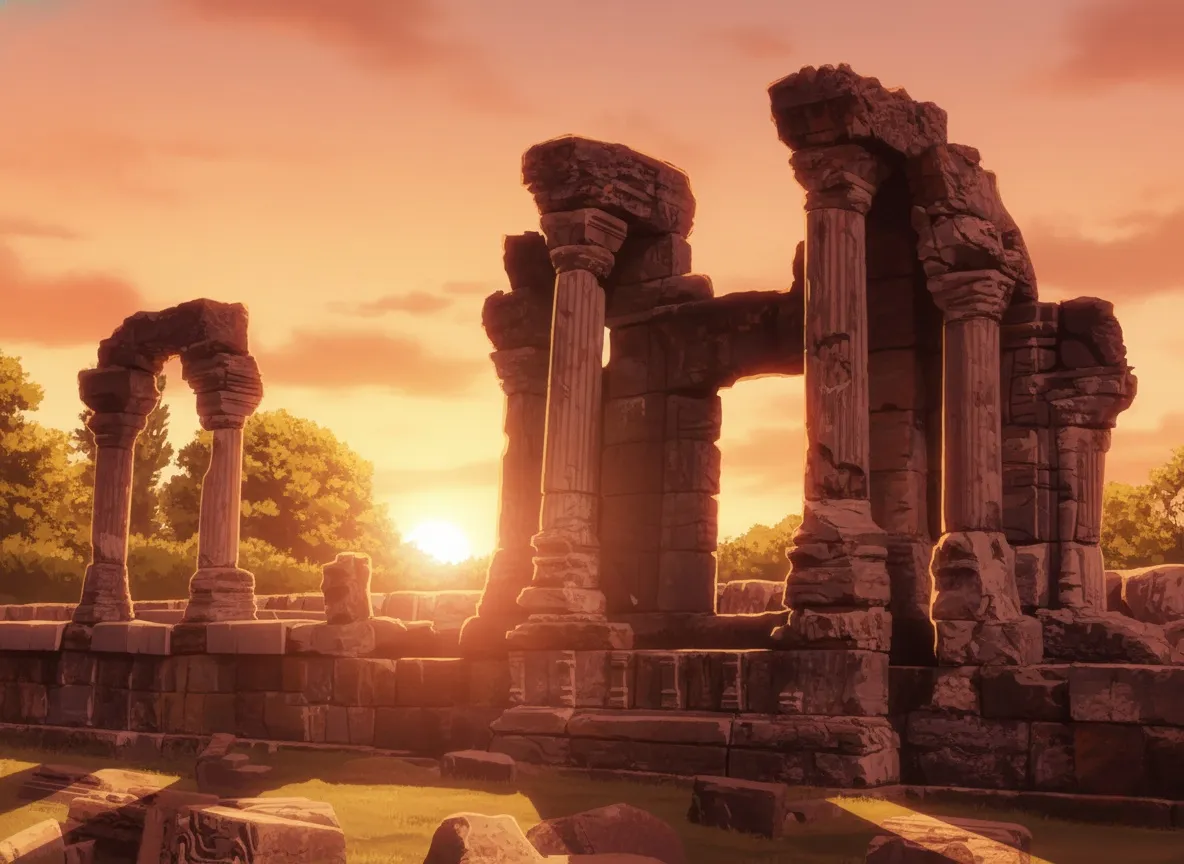
The name Martand originates from Vedic literature and refers to Surya as the “born of the cosmic egg.” In Kashmiri tradition, Surya was considered the primordial king, from whom earthly rulers derived legitimacy.
The temple’s strict solar alignment ensured that during equinoxes, the first rays of the sun traveled along the central axis and illuminated the deity. The surrounding 84 subsidiary shrines are interpreted as representations of solar attendants, zodiacal divisions, and cycles of cosmic time. Architecture here functions as a ritualized cosmic diagram rather than mere enclosure.
Destruction, Abandonment & Rediscovery
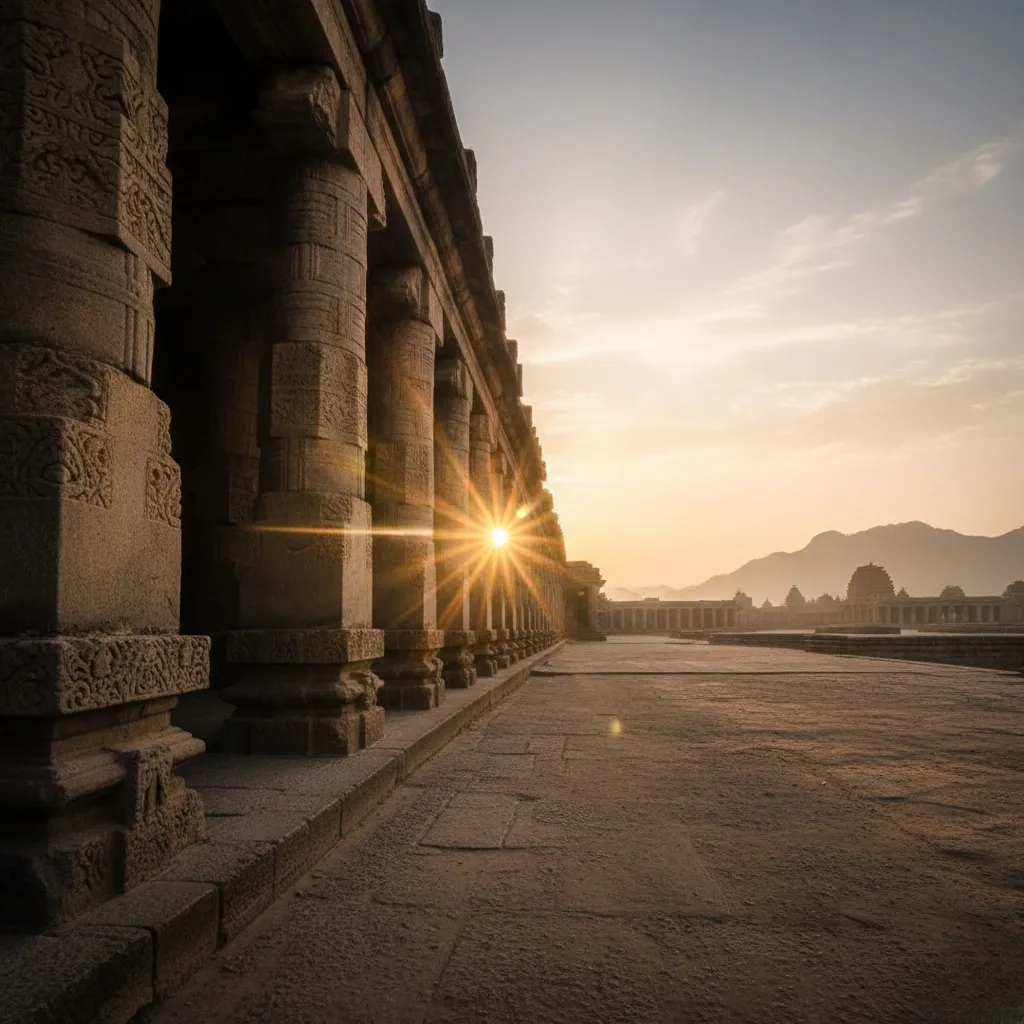
The decline of Martand was not accidental—it reflects a decisive shift in political power and religious patronage.
- Period of Destruction: 14th–15th centuries CE.
- Attributed Ruler: Sultan Sikandar (Butshikan).
- Method: Timber fires lit inside the structure to weaken stone masonry.
- Religious Impact: Decline of solar worship in Kashmir.
- Aftermath: Site gradually abandoned and partially buried over centuries.
Present Condition & Architectural Legacy
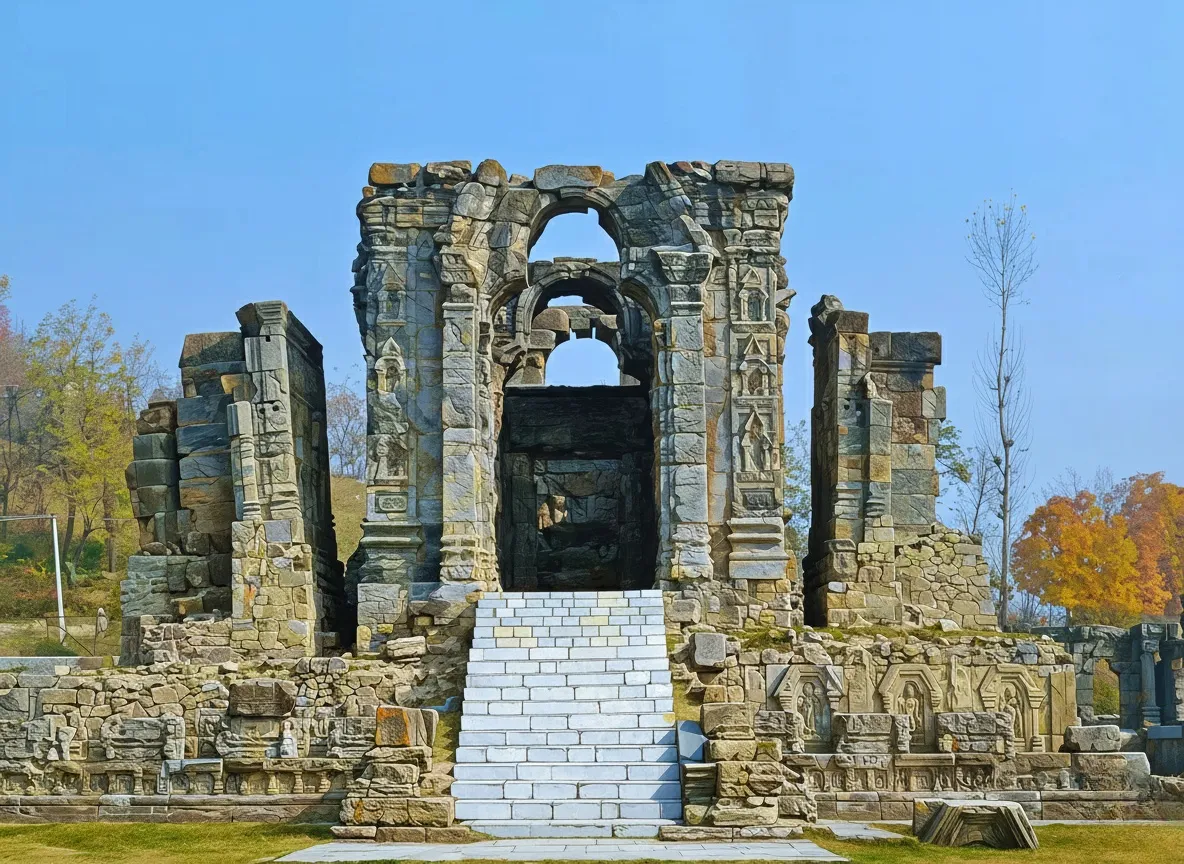
Today, approximately 60–65% of the original temple footprint remains clearly legible. Standing columns, the central shrine plinth, perimeter walls, and the monumental entrance gateway survive, allowing accurate interpretation of spatial and structural intent.
The site is protected by the Archaeological Survey of India (ASI) and preserved without reconstruction. For architecture students, Martand Surya Temple remains a critical case study in early stone monumentalism, cross-cultural synthesis, climate-responsive design, and seismic engineering in early medieval India.
The Brihadeshwara Temple
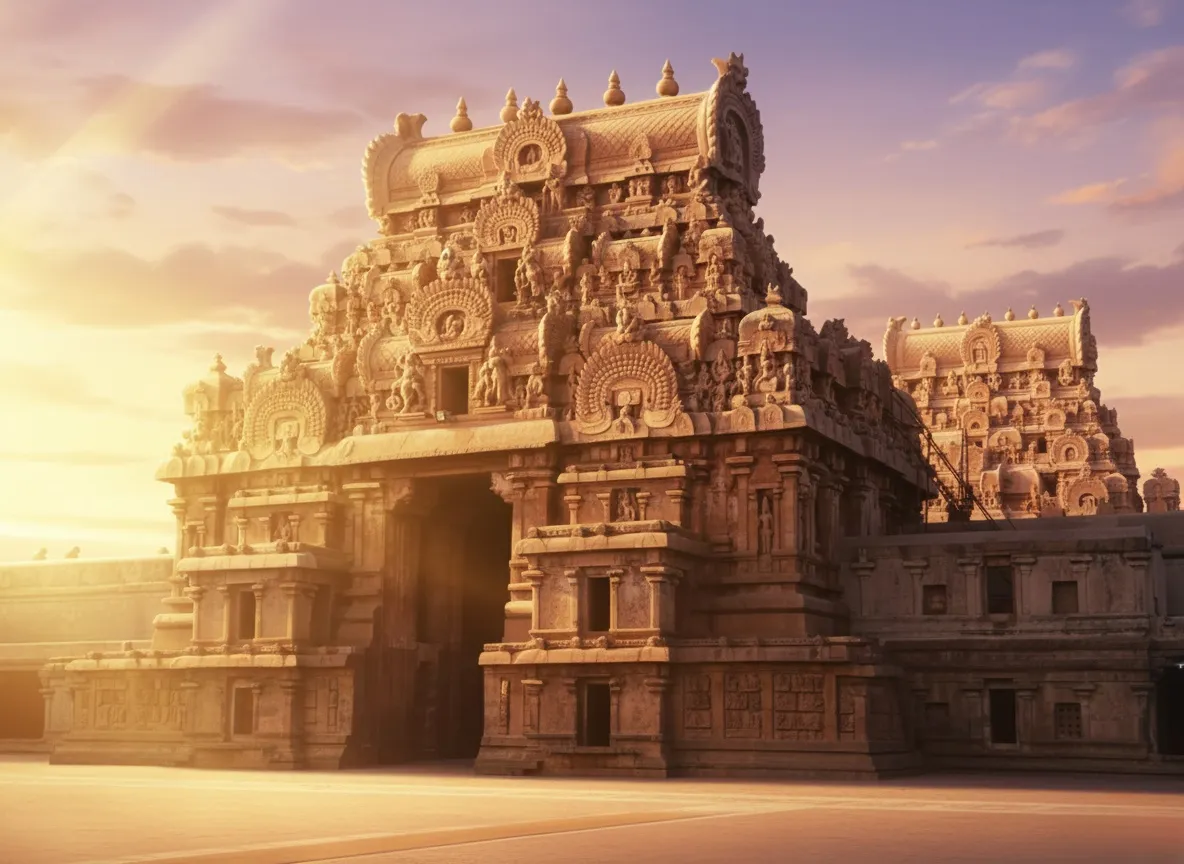
The Brihadeshwara Temple, built in the 11th century CE by King Raja Raja Chola I, is a grand example of Dravida architecture. This architectural marvel in Tamil Nadu is known for its massive structure, intricate carvings, and sacred symbolism.
Explore Now →